
In digital-first romance, vulnerability serves as currency rather than the basis of connection
But if dating apps have made cynics of everyone looking for love, how do we find our way back to intimacy?

Yesterday afternoon I was talking to a friend about how dating apps have made everyone feel disposable. All while creating a culture in which we’re encouraged to perform vulnerability in a way that fundamentally undermines genuine intimacy and connection. Something occurred to me then that has changed the advice I will now give to anyone looking for love.
But first let me tell you what happened to my friend, because her latest dating experience encapsulates everything I perceive as going haywire with our current dating culture.
*
She matched with a guy on a dating app a few months ago, she told me, and they quickly started speaking regularly, intensely. They migrated to WhatsApp after a flurry of in-app-messages, before ratcheting things up with a string of lengthy, deeply personal voice-notes. After the usual exchange of introductory niceties — descriptions of their respective days; what they were each reading — he dived into telling her about his family trauma and the ongoing issues he was having with his parents, before detailing some of the more pressing topics he was currently addressing in therapy. Next he told her about his ex and the specifically cruel way with which she’d broken his heart.
The more they talked, the more he divulged. And rather than feeling put off by his outpourings, my friend found herself intrigued by his openness — drawn in by his apparent capacity for vulnerability. She was encouraged by his willingness to talk about his feelings, a trait previous partners had notably lacked. And quickly found herself returning his own admissions with ones of her own. As they delved deeper into one another’s interior lives, they simultaneously discussed plans for all the dates they wanted to go on once the holiday season was over.
Alas, those plans remain unfulfilled.
After several weeks of Catholic Confessional-style voice-note exchange, my friend’s new potential lover suddenly went quiet. When she asked what was going on, he responded with a text I recognised all-too-well: the break-up essay. On reflection, he wasn’t ready to date. His head was all over the place (you don’t say). He needed to spend some more time on his own. He was still thinking about his ex. He was no longer sure what he wanted — in life as in dating.
She was taken aback, given he’d been the one who’d initiated the frequency and intensity of their messages, but reminded him that they didn’t need to break up. They hadn’t actually met and weren’t yet dating. She promptly blocked him.
Listening to my friend describe how disorientated the exchange had left her, I was reminded of the whiplash I too felt constantly during my years of digital dating.
Because while there is a certain allure to the non-stop communication underpinning such romances, digital proximity combined with physical distance creates the illusion of closeness devoid of any meaningful connection.
And it encourages a spate of deeply problematic behaviours which have come to redefine the way we date.
The problem, as I now see it, is threefold – and it explains why digital-first romances are leaving people increasingly disconnected and cynical about love.
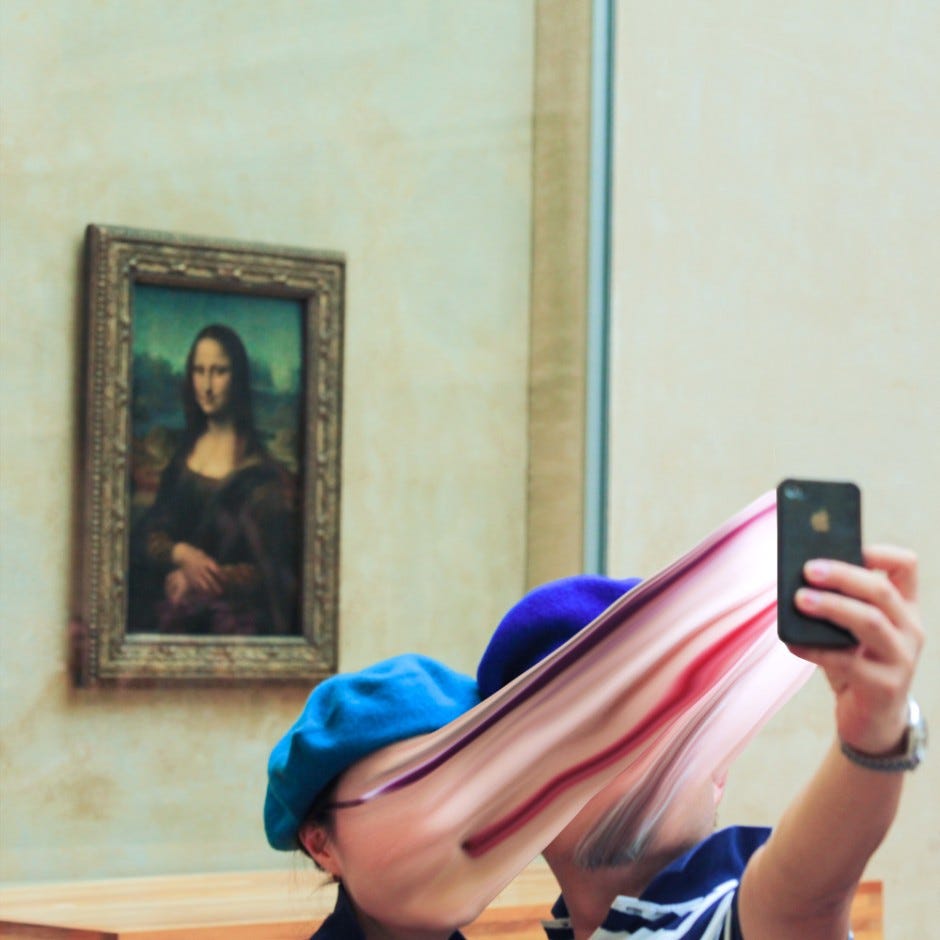
1. Digital-first romance privileges data over connection
When we meet someone on an app, we’re trying to determine attraction using incomplete information: how they look in their photos, their style, what they like, their job title, how they text. None of this gives our brains the kind of rich, embodied, sensory data it evolved to read.
As evolutionary biologist Anna Machin writes in Why We Love, when we meet a potential love-interest in-person, we are immediately, unconsciously, taking in a spate of crucial data points. Our brains are assessing whether someone is a biologically and socially viable partner, scanning for cues of health and genetic compatibility — things like symmetry, scent, vitality. But also for signals of emotional safety and long-term bonding potential, such as warmth, humour, and responsiveness. Attraction, she explains, is a deeply embodied survival and attachment mechanism, one that simply cannot be mirrored through an entirely digital process.
And yet, in an increasingly app-defined dating landscape, we make the best of the tools we have before us and keep swiping, striking up conversations with whichever little pixellated squares of flesh we deem hot. We migrate platforms, escalate messaging, and search for more clues of attraction — all while building an incomplete, two-dimensional picture of the person on the other side of our screens.
I dated digitally for years, mostly meeting people on dating apps (occasionally IRL) before spending days, weeks, months messaging them rabidly as though my life depended on it. I have spoken about the WhatsApp boyfriend phenomenon many times before in these pages, so you know by now that I wracked up more text-based bfs in my single years than I knew what to do with. You will also know that none of these digital flings translated IRL. While the sheer volume of message-exchange tended often to give the impression of my getting to know someone, information-collection is different to connection. And where digital communication is excellent for the former, it distracts from the latter.
When, eventually, I did get round to meeting a WhatsApp boyfriend in-person, it always felt like we were starting from scratch. I recognised the anecdotes, I knew the friends’ names, but at the end of the day the person sitting across from me was a stranger, and not the confidante I’d conjured following weeks of blue ticks.
Real connection requires closeness of the in-person variety — endless messaging makes for a poor, most often inadequate, substitute.
2. Digital-first romance encourages performative vulnerability
In the digital terrain it is easy to offer up the sort of intimacies you might not otherwise share with someone you’re only just getting to know.
Digital proximity combined with physical distance creates a tantalisingly anonymous sort of conversational dynamic. One in which the exchange of personal confidences serves more as currency than the basis of connection.
A way of demonstrating capacity for depth, introspection and emotional honesty, without ever having to be held accountable to the person you project online.
It’s a low-stakes environment after all, since there is little real emotional commitment involved in a conversation from which either of you can so easily walk away. It’s a connection of convenience made perceivably more meaningful through the exchange of pre-packaged stories of trauma and heartbreak. At the first sign of friction, the initial whiff of complication, a number can be blocked, a chat deleted and onto the next.
Performative vulnerability is just the digital parlance of today’s chronic ghost-er, well-accustomed to intensity but a stranger to real intimacy// in-to-me-see.
3. Digital-first romance is fundamentally dehumanising, creating mutual suspicion among everyone looking for love
And this leads me to the third issue. The dehumanisation that underpins digital romance. By gamifying dating, apps have turned the search for love into a sport in which we’re encouraged to participate with ferocity but no emotion. With the entire world’s single population supposedly at our fingertips, everyone feels accessible and no connection sacred.
The result? A culture of careless daters.
Non-committal Lotharios who can’t match their words with their actions
Emotionally unavailable dating enthusiasts perpetually holding out for the one
TikTok-informed ‘therapists’ fluent only in diagnosis and for whom everyone’s a narcissist
And seasoned romantics who know how to seduce, but not how to love.
Everyone else becomes hardened in the face of incessant, insouciant rejection, growing cynical with experience and pre-emptively guarded as a result. Afraid of being ghosted so inclined to ghost first, or else defensively non-committal in their gestures toward intimacy.
Dating apps have trained us to approach love with suspicion and potential lovers with near-universal disregard.
And so to the shift in the dating advice I would now offer.
Previously, I believed that if you wanted to meet a partner you needed to “put in the hours.” Use the apps intentionally. Expose yourself to as many potential lovers as possible. If dating is a game of probability, then maximise your odds through mass digital exposure.
Now my advice has shifted.
If you’re looking for love, put down your phone. Look up at the world. Start talking to people. Go to cafes, and bars. Join a new gym. Take up a hobby. Go up to that person on the street who looks nice and ask them a question. Any question!
The antidote to cynicism is connection. So go out and speak to your fellow humans. The worst they can do is turn you down. And better to know immediately than after months down a digital rabbit hole playing therapist to a stranger who doesn’t even know they’re an emotionally unavailable mess.
Your time is too precious for that.
Dating INs and OUTs
OUT
They’re speaking to me like I’m their therapist.
We haven’t met yet but we’ve spoken about EVERYTHING. They’ve been so vulnerable with me.
I’ve started copying and pasting the same messages across different chats with people from the apps. It saves me so much time in intros.
I’m building my roster so I don’t get too attached to anyone specific.
We haven’t been able to find a time to meet yet, but we message constantly. I feel like I know them so well already.
Things were going well, actually. But then I got bored so I ghosted them and blocked their number. I don’t want to waste my time.
IN
*puts down phone. Looks up at the world. Starts a conversation with another human at the cafe.
Good read! I’m curious to know what your thoughts are in this new dating app called Breeze where you can’t chat with your matches but once you match, the app organizes your first date in-person immediately? I’ve been liking it but still feel like modern-day dating is truly making everyone feel disposable (even with the rise of “offline dating” events) 😔
How did you meet your partner?